Just One Small Change? Why Change Management Matters in Manufacturing
Introduction
How a seemingly minor process change can affect risk, documentation, approvals, and product quality.
Have you ever heard this in a manufacturing environment?
“It’s just a small change. It won’t take much time.”
The change may take only a few minutes. But for a quality engineer, it could involve risk assessment, document updates, approvals, training, and verification.
Suddenly, that “small change” becomes a complete quality activity.
The real challenge is not making the change. It is controlling its impact.
A Change Does Not Happen in Isolation
Manufacturing processes are interconnected. A small change in one area can affect several others.
- A process parameter change may require a Control Plan review.
- A component change may affect specifications or inspection requirements.
- An equipment or method change may require updated work instructions and operator training.
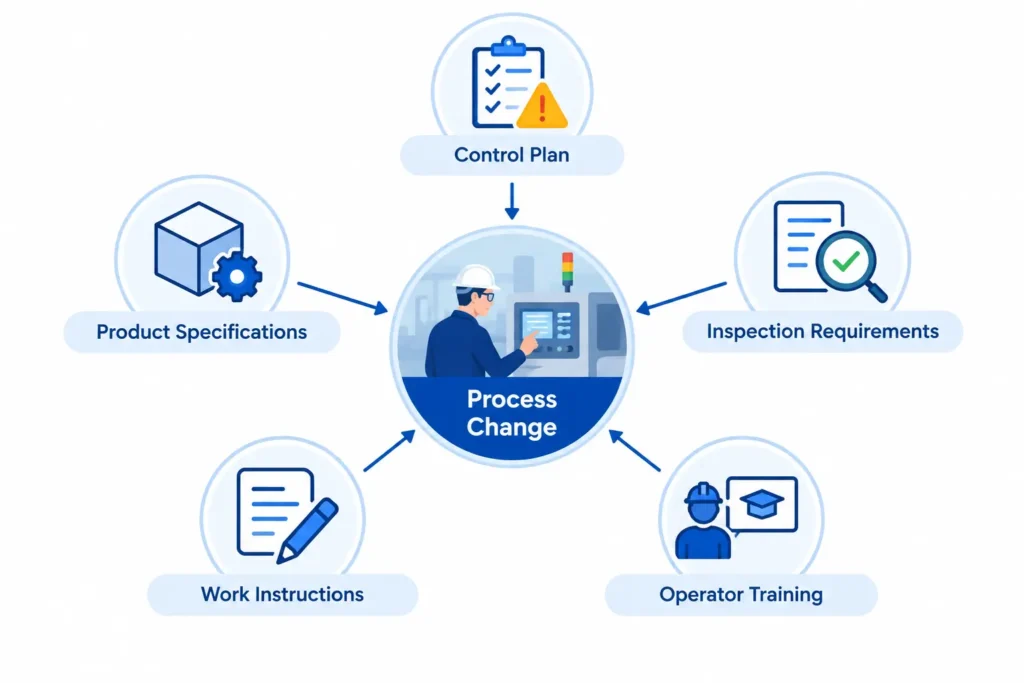
When these impacts are not identified early, organizations risk outdated documents, inconsistent practices, and unexpected quality problems.
When Changes Are Managed Informally
Consider a manufacturing team that modifies a process parameter to improve productivity.
The change is implemented, but important questions remain:
- Was the risk assessed?
- Were the necessary documents updated and approved?
- Were affected employees informed or trained?
- Was the effectiveness of the change verified?
- Is the correct document revision being used?
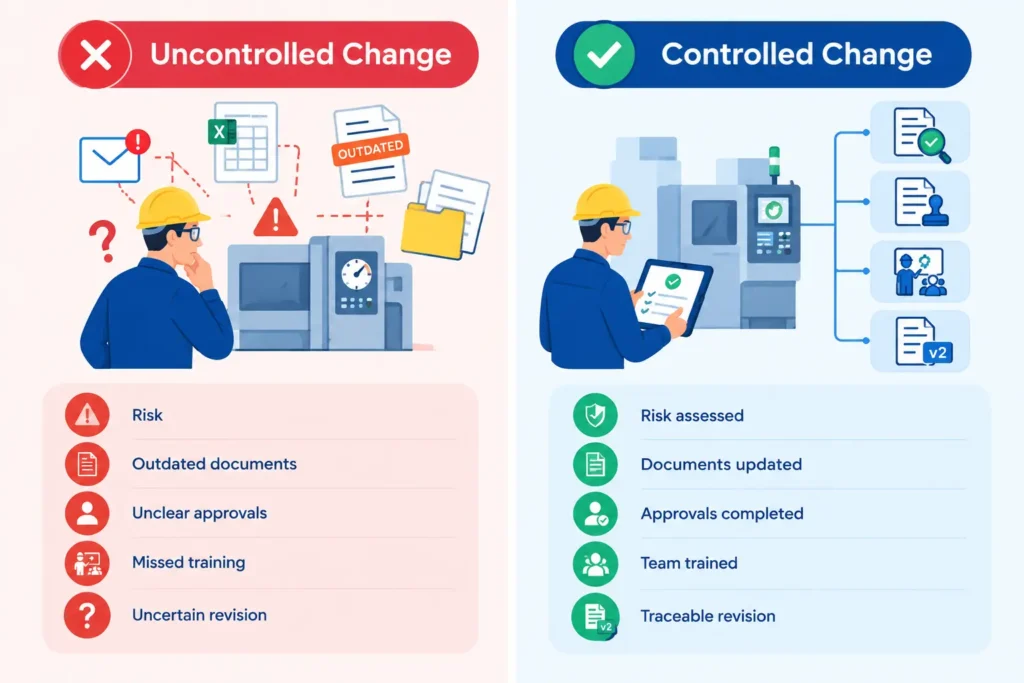
When information is scattered across emails, spreadsheets, and separate files, tracking these activities becomes difficult.
The problem is not the change itself. It is losing control of the activities surrounding it.
From “Change Made” to “Change Controlled”
A structured Change Management process helps organizations handle changes through defined stages:
Request → Risk Assessment → Review & Approval → Implementation → Verification → Closure
Depending on the change, this process may also require document updates, employee training, and communication.
Each stage helps ensure that the change is properly evaluated, authorized, implemented, and checked against its intended outcome.
The goal is not to prevent changes. It is to make sure their potential impact is understood and controlled.
Why Document Control and Traceability Matter
Imagine an auditor or quality manager asking:
“Why is this document different from the previous version?”
A structured process should make it easier to understand what changed, which approvals were completed, and which version or revision applies.
In Live!QC Tools, version history is maintained for versions created during editing and approval activities. Formal revision is also monitored, with the revision number updated upon final approval.
This distinction helps maintain a clearer record of how controlled documents progress through the change process.
How Live!QC Tools Supports Change Management?
Live!QC Tools helps organizations manage change-related activities within a structured digital environment rather than relying entirely on scattered records and manual follow-ups.
It supports the management of activities such as:
- Change requests and risk assessment
- Document updates and version/revision management
- Review and approval workflows
- Training and communication
- Effectiveness verification
Bringing these activities into a structured process helps teams maintain visibility of responsibilities, approvals, and related records.
The objective is simple: make changes easier to manage, follow, and trace without losing control of their impact.
Just One Small Change?
The next time someone says:
“It’s just a small change.”
A quality engineer may see something different:
Risk Assessment → Document Update → Approval → Implementation → Verification
In manufacturing, the size of a change does not always determine the level of quality control it requires.
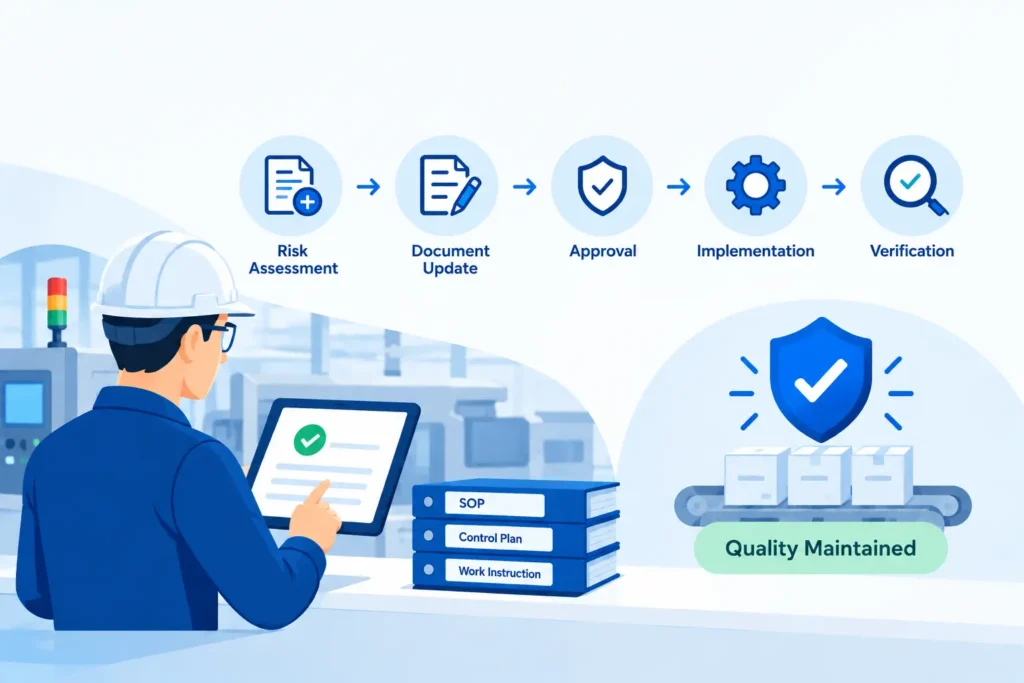
A small change can have a large impact.
Good Change Management ensures that the impact is understood, controlled, and verified.
Just one small change? Maybe. But it should still be a controlled change.
Manage your quality processes with Live!QC Tools.