Introduction
If you work in Quality, you probably know what happens when an ISO 9001 and IATF 16949 audit readiness is approaching.
People start searching for documents, checking training records, following up on CAPAs and comparing the PFMEA with the Control Plan. Files are pulled from different folders, spreadsheets and systems. What should be a normal review suddenly becomes a last-minute exercise.
The problem is not the audit itself. The problem is preparing for the audit only when the audit is near.
A better approach is to make your quality system audit-ready as part of everyday operations.
1. Make Audit Readiness a Continuous Activity
Audits should not be treated as annual events.
When organizations wait until the audit is approaching, document reviews, internal audits, corrective actions and record verification all happen at the same time. This creates unnecessary pressure on the Quality team.
Instead, introduce regular checks into daily and weekly activities.
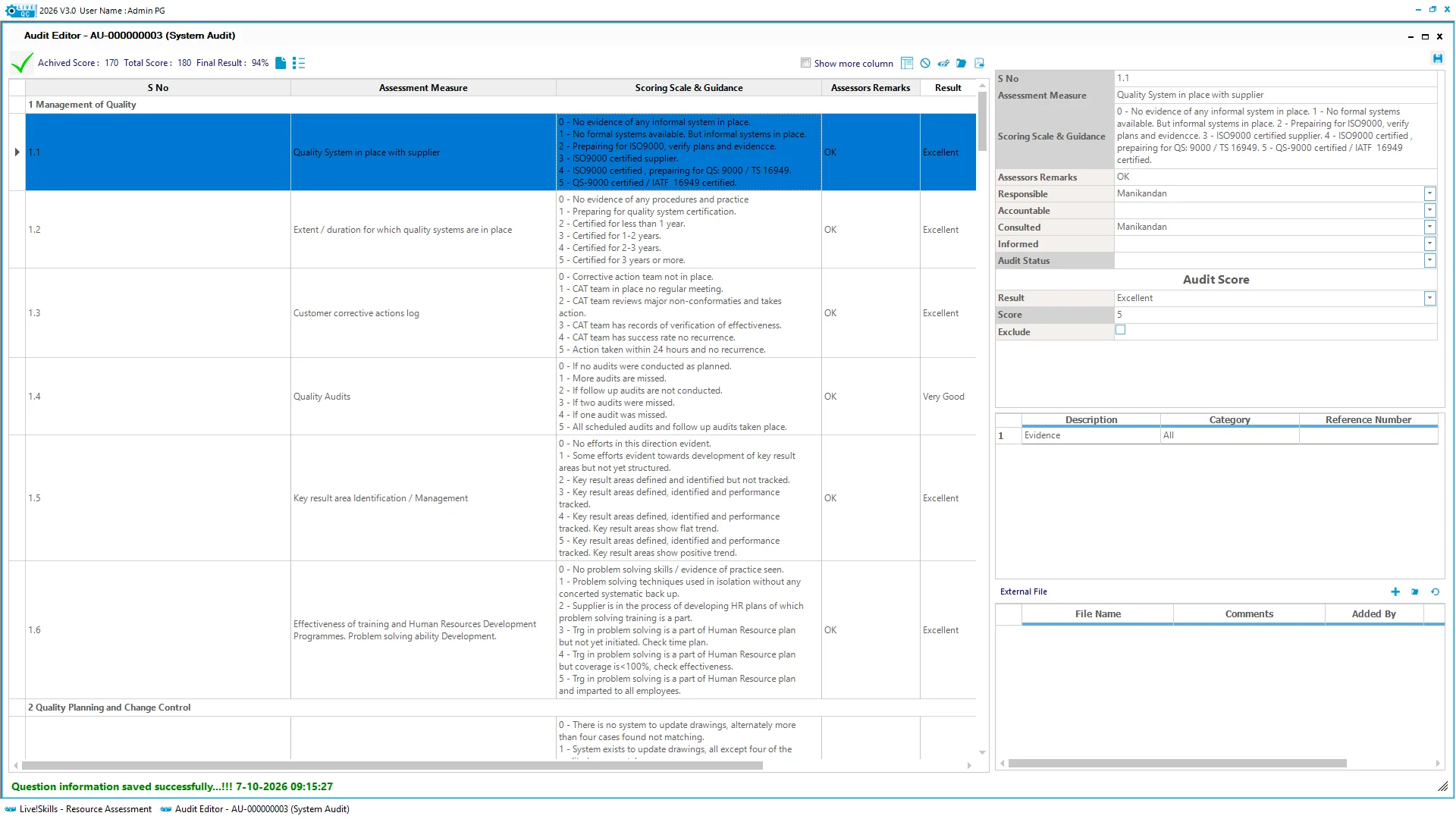
Layered Process Audits (LPAs), routine document reviews and periodic compliance checks can identify gaps much earlier. When the QMS reflects what is actually happening on the shop floor, audit preparation becomes much easier.
The mindset should be simple:
Don’t prepare for the audit. Stay prepared for the audit.
2. Connect Your Quality Information
For IATF 16949 organizations, one of the biggest challenges is keeping the different Core Tools aligned.
PFMEA, Process Flow, Control Plan, Work Instructions, MSA and SPC are closely connected. However, in many organizations they are maintained as separate Spreadsheet files, documents or systems.
Consider what happens when a process changes.
The PFMEA may be updated, but was the Control Plan updated? Was the Work Instruction revised? Was the operator retrained?
A connected digital QMS can help maintain these relationships and improve traceability.
For example, when a customer complaint leads to a process change, the complete trail should be easy to follow:
Complaint → NCR/CAPA → Root Cause → 8D → PFMEA → Control Plan → Work Instruction → Training
When an auditor asks, “Show me what happened after this complaint,” the answer should not require searching through five different folders.
3. Keep Training and Competency Records Ready
Training records are another common source of audit stress.
An auditor may select an operator and ask for their training record, competency status or evidence that they were trained on the latest revision of a Work Instruction.
If these records are maintained manually, finding the right information can take considerable time.
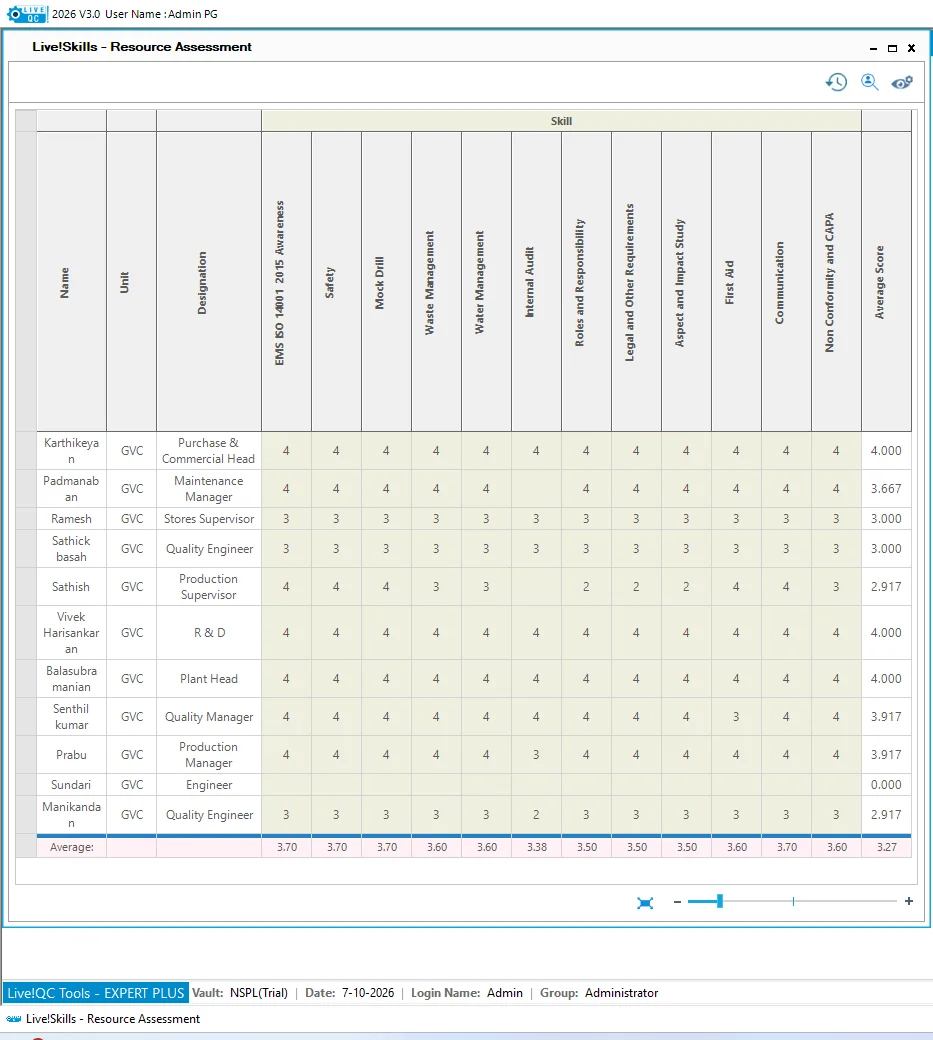
A digital competency matrix can make this process much easier. Training requirements can be linked to employees, processes, machines and documents. When an important document is revised, the need for retraining or acknowledgement can be identified and tracked.
The objective is more than simply having a training record.
You should be able to demonstrate:
The right person was trained on the right requirement, at the right time.
4. Make Audit Evidence Easy to Find
Having the right information is important, but being able to find it quickly is equally important.
During an audit, the auditor may ask for an internal audit report, CAPA status, Management Review record, KPI trend, process document or training record.
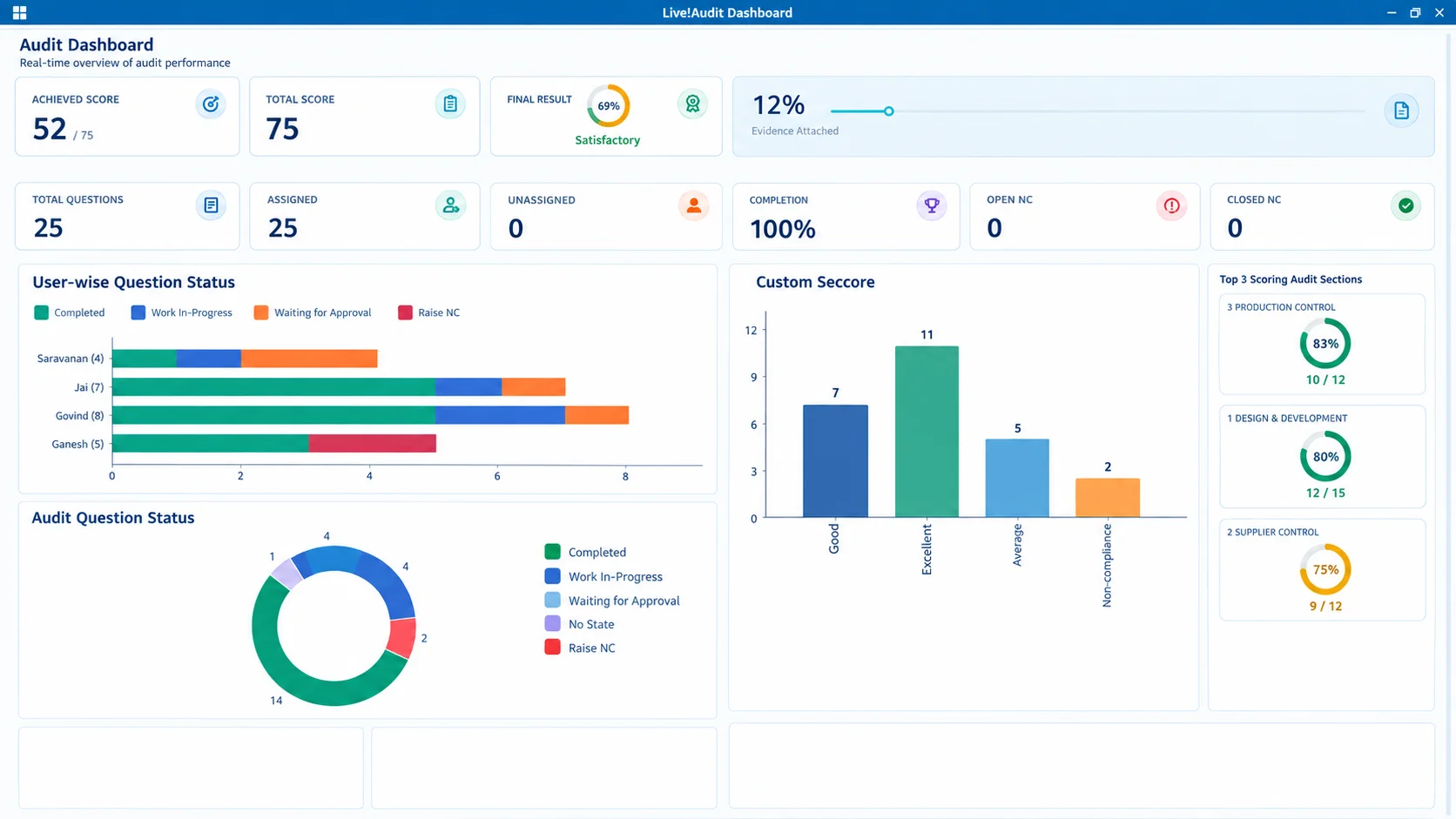
A centralized QMS dashboard can provide quick access to these areas.
It can bring together:
- Internal and external audit records
- CAPA and 8D status
- Management Review information
- Quality KPIs
- Risk and opportunity records
- Training and competency status
- Document revisions
- Customer complaints
- Process performance
This does not need to be a complicated dashboard. The purpose is simply to provide a single starting point for navigating the QMS.
When evidence can be found in seconds rather than minutes, the audit becomes much more comfortable for everyone involved.
5. Manage CAPA Continuously, Not Before the Audit
Overdue corrective actions are another area that can create unnecessary pressure.
Auditors do not expect an organization to have zero problems. They want to see that problems are identified, investigated, corrected and prevented from recurring.
A strong corrective action process should answer four basic questions:
What happened?
Why did it happen?
What action was taken?
Did the action actually work?
Root cause analysis should go beyond statements such as “operator error” or “retraining provided.” Tools such as 5 Why, Fishbone and 8D can help identify the real cause.
Action owners should also receive timely reminders and effectiveness verification should be part of the closure process.
This creates a simple closed-loop approach:
Problem → Root Cause → Corrective Action → Implementation → Effectiveness Check → Closure
When CAPA is managed continuously, there is much less to clean up before an audit.
From Audit Preparation to Audit Readiness
The difference between a stressful audit and a smooth audit is not simply the amount of documentation you have.
It is how well your information is maintained, connected and accessible.
The goal is not to eliminate audits. It is to eliminate the last-minute panic before an audit.
When documents, trainings, Core Tools, corrective actions and performance data are maintained as part of everyday operations, audit readiness becomes a natural outcome of the system.
Instead of spending days gathering evidence, the Quality team can spend a few minutes reviewing the current status and confirming that everything is in place.
Conclusion
Audit day should feel like another normal working day – not an emergency.
That is the real value of moving from reactive audit preparation to continuous digital quality management.
Author Details
Tamil Vanan Gopal is an Application Engineer at Live!QC Tools with expertise in QA/QC, ISO Internal Auditing, 7 QC Tools, 5S, 8D Problem Solving, FMEA, PPAP, MSA, and Poka-Yoke. With prior experience at Pressform Industries, he specializes in helping manufacturers improve quality processes through digital transformation and smart quality management solutions.