
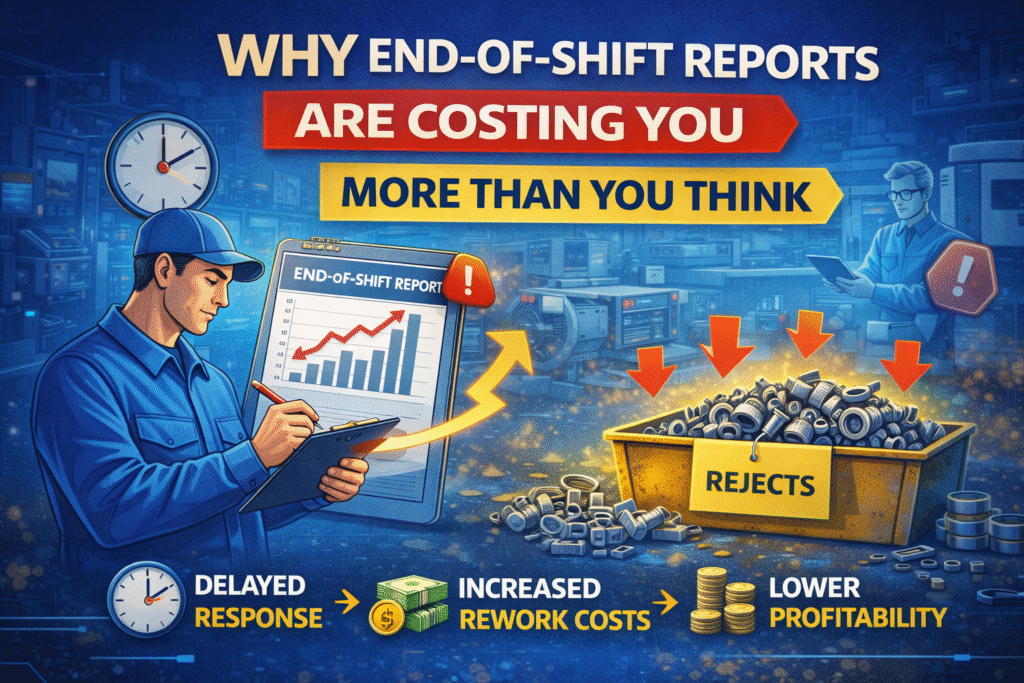
Why End-of-Shift Reports Are Costing You More Than You Think
Introduction
In many manufacturing plants, shop floor data is collected throughout the shift — but reviewed only at the end.
Inspection results, rejection details, and process deviations are compiled into reports and analyzed after production is complete.
At first glance, this seems structured and controlled.
But in reality, this delay is costing more than most organizations realize.
The Hidden Problem with End-of-Shift Reporting
End-of-shift reports create a time gap between:
When a problem occurs
and
When it is identified
During this gap:
- Process deviations continue unnoticed
- Defective parts keep getting produced
- Scrap and rework accumulate
By the time the report is reviewed, the loss has already happened.
You are not controlling the process — you are documenting the damage.
Where the Cost Actually Comes From
Let’s break it down.
When issues are detected late:
- Scrap increases due to continued production of defective parts
- Rework consumes time and manpower
- Machine capacity is wasted on non-conforming products
- Production schedules get disrupted
- Customer risk increases if defects escape
These are not small losses — they directly impact profitability.
Real Manufacturing Example: Precision Tool Manufacturing
Consider a precision tool manufacturing process producing cutting tools such as end mills or drills.
During grinding operations, tool dimensions and surface finish are critical. Over time, grinding wheel wear can cause gradual deviation in tool geometry.
If measurements are reviewed only at the end of the shift:
- Multiple tools may already be out of tolerance
- Surface finish may not meet specifications
- A batch of tools may require rework or rejection
This leads to material loss, machine time wastage, and delayed deliveries.
Now consider the same scenario with immediate visibility:
- Dimensional variation is detected early
- Wheel dressing or parameter correction is done immediately
- Only a few tools are affected instead of an entire batch
- Process stability is maintained
The process remains the same.
The cost changes based on when the issue is detected.
The Real ROI Impact
Even a small delay in identifying issues can lead to significant financial loss.
For example:
- In high-precision manufacturing, even a few microns of deviation can lead to rejection
- One unnoticed drift can affect an entire batch
- Early detection can save material, machine time, and labor cost
End-of-shift reporting doesn’t just delay action —
it increases the cost of every mistake.
Moving from Reporting to Control
To reduce these losses, manufacturers must shift from:
End-of-shift analysis → Real-time decision making
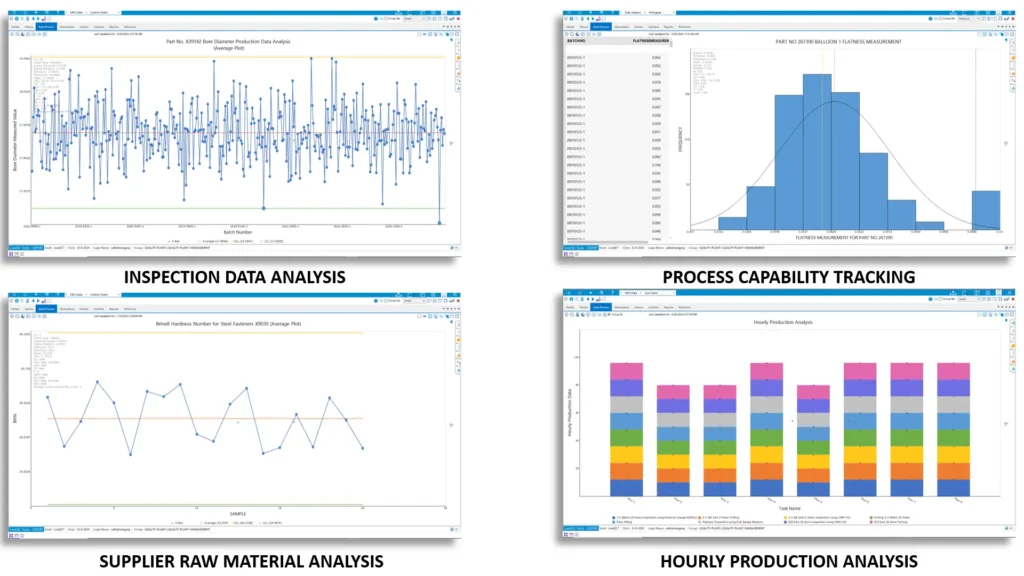
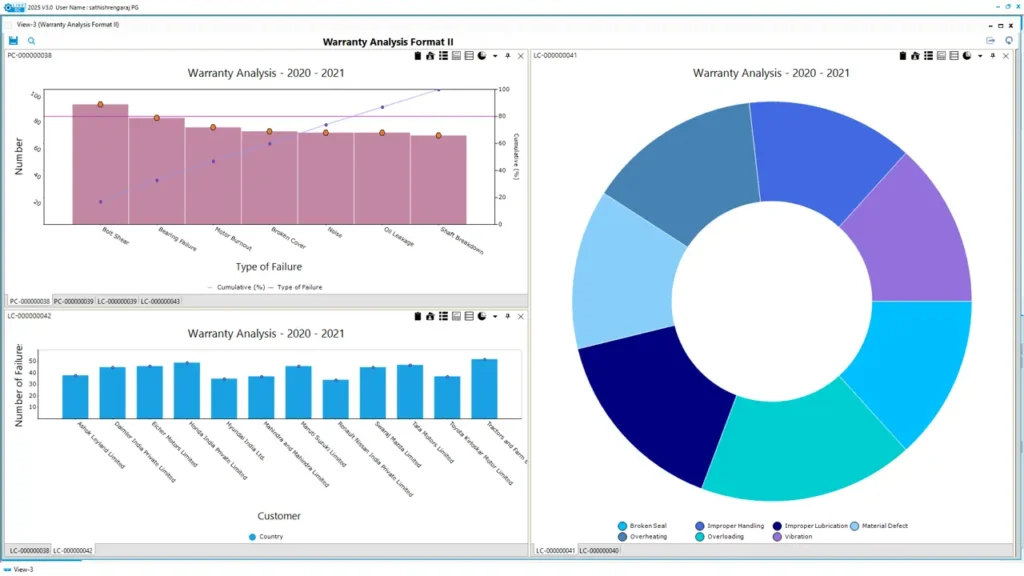
With digital tools like Live!QC Tools:
- Data is captured instantly at the process level
- Deviations are visible immediately
- Engineers can act during production — not after
This changes the role of data from reporting to control.
Conclusion
End-of-shift reports may give a clear picture of what happened —
but they come too late to prevent it.
In manufacturing, timing is everything.
The sooner a problem is detected, the lower the cost.
The longer it goes unnoticed, the more expensive it becomes.
Delayed data is not just a delay — it is a cost.

About Author
Christopher A is a technical solutions professional working closely with manufacturing industries to simplify and strengthen quality processes. With hands-on experience in implementing digital quality systems like Live!QC Tools, he focuses on turning complex data into actionable insights that drive real improvement.