Internal Audit Management: Moving from Paper to Digital in Indian Manufacturing
Introduction
In today’s manufacturing environment, quality is not just about making products without defects. It is about building systems, following rules, keeping track of things, and always trying to improve. A key part of every Quality Management System (QMS) is internal audits.
Many Indian manufacturing organizations still use paper checklists, spreadsheets, email, and manual follow-ups for audits. These methods are becoming inefficient, taking much time and are hard to manage as organizations grow.
The shift from paper-based auditing to digital audit management is necessary. Modern manufacturing needs faster decisions, better visibility, and complete accountability. Digital audit management provides these benefits.
The Challenges of Traditional Audit Management
Many organizations still use printed audit checklists and manually maintained records. These methods cause operational problems.
Common Challenges
- Audit schedules are tracked using spreadsheets, which can lead to missed audits or deadlines.
- Observations are written on paper, requiring extra effort to compile reports after the audit.
- Corrective actions are communicated through emails or verbal discussions, making it hard to monitor progress.
- Finding records during audits can waste valuable time.
As production lines, suppliers, departments, and compliance requirements increase, managing audits manually becomes complex.
These challenges reduce productivity, increase the risk of delayed corrective actions, and contribute to recurring quality issues.
Why Digital Audit Management Matters
Digital transformation has changed manufacturing through automation and connected systems. Quality management should change in the same way.
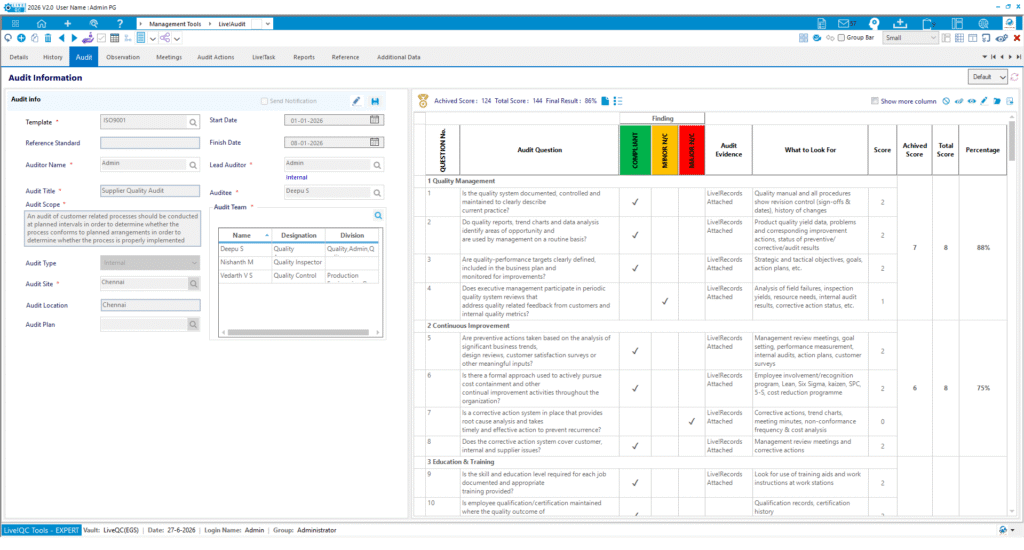
A digital audit management system centralizes every part of the audit process. This improves visibility, collaboration, and control across the organization.
Building a Structured Audit Process
An effective audit is more than filling out a checklist. It is a process that helps organizations find gaps, evaluate process effectiveness, and drive continual improvement.
A digital audit management solution enables organizations to:
- Plan audit schedules in advance.
- Configure audit templates for departments and standards.
- Assign auditors and define responsibilities.
- Capture observations digitally during audits.
- Attach photographs and supporting evidence.
- Generate reports instantly.
- Assign corrective and preventive actions.
- Track closure status until completion.
Supporting ISO and IATF Compliance
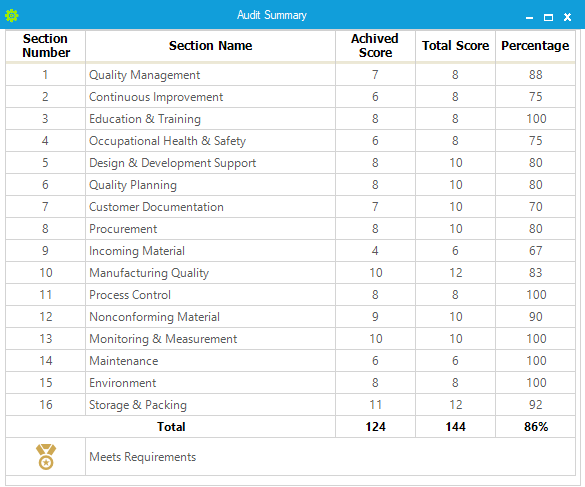
Compliance with standards such as ISO 9001 and IATF 16949 requires planning, execution, documentation, and follow-up of internal audits.
A digital audit system simplifies this process by maintaining records that are easily searchable and readily available during certification or customer audits.
Faster Corrective Action and Better Accountability
Digital audit management eliminates delays in closing observations by assigning responsibilities and tracking due dates.
Management teams gain real-time visibility into pending actions, ongoing tasks, and completed corrective actions.
Improving Decision-Making Through Visibility
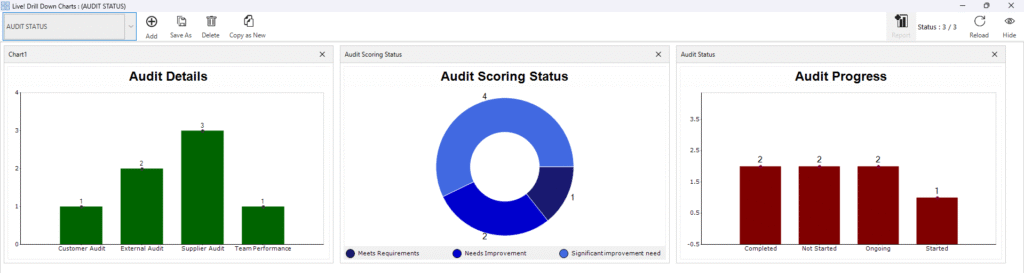
Manufacturing organizations need actionable insights. A digital platform provides dashboards and analytical reports that help management understand trends, identify recurring issues, and make informed decisions.
The Live!QC Tools Approach
Live!QC Tools is designed to simplify and digitize the internal audit process.
The Live!Audit module enables organizations to configure audit templates, schedules, checklists, and workflows, helping teams manage audits efficiently while maintaining compliance and accountability.
Preparing for the Future
Manufacturing in India is embracing digital transformation. Quality management must evolve alongside these initiatives.
Organizations that digitize their audit processes today are laying the foundation for future capabilities, improved operational efficiency, and stronger compliance management.
Conclusion
Internal audits play a critical role in maintaining quality and ensuring compliance. However, managing them through paper records no longer meets today’s manufacturing demands.
Moving from paper to digital transforms audits into a more transparent process. It improves traceability, strengthens accountability, and provides management with valuable insights.
With Live!QC Tools, organizations can modernize their audit management. The journey toward quality excellence begins with better visibility, control, and decision-making—and digital audit management is an important step in that journey.

Senior Technical Consultant – Live!QC Tools
Vishnu Sivan is a Senior Technical Consultant specializing in Quality Management Systems (QMS) and digital transformation solutions. He helps manufacturing organizations streamline quality processes, improve compliance, and drive operational excellence through Live!QC Tools.