
Introduction
Manufacturing industries generate large volumes of shop-floor data every day—inspection readings, production output, rejection quantities, machine parameters, and downtime records.
But an important question remains:
Is this data helping improve quality and performance — or is it simply filling reports?
Many organizations collect data consistently, yet struggle to convert it into actionable insights.
The Problem with Traditional Data Collection
In many factories:
1.Operators record dimensions manually
2.Reports are reviewed at the end of the shift
3.Deviations are identified late
4.Corrective action starts only after rejection increases
This creates a gap between when a problem occurs and when it is detected.
By the time trends are analyzed, scrap and rework may already have increased.
When Data Becomes Actionable
Shop-floor data becomes valuable only when it:
- Is visible in real time
- Clearly highlights deviations
- Shows trends before limits are crossed
- Enables immediate corrective action
That’s the difference between collecting numbers and controlling processes.
The Role of Digital Quality Monitoring
Using digital platforms like Live!QC tools, inspection and process data are captured directly at the operation stage and displayed instantly.
Instead of waiting for reports:
- Dimensional variations are visible immediately
- Trends can be monitored continuously
- Engineers can respond without delay
This changes quality management from reactive to preventive.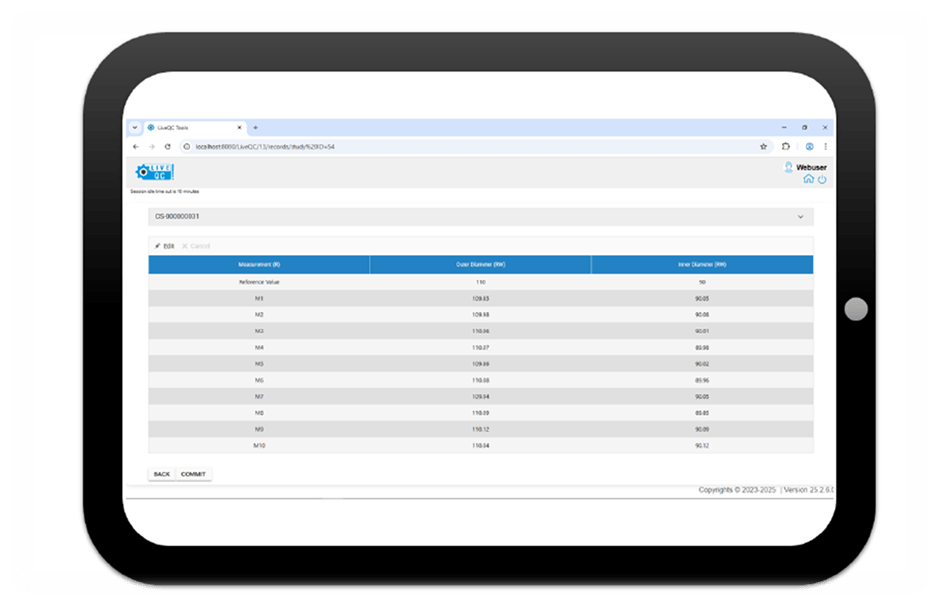
Real Manufacturing Example: Precision Machining
Consider a CNC machining line producing precision shafts.
Operators measure the shaft diameter at regular intervals. In a traditional system, readings are entered into a log sheet and reviewed later. If tool wear causes gradual dimensional drift, the issue may only be noticed after multiple parts are already out of tolerance.
With real-time digital monitoring:
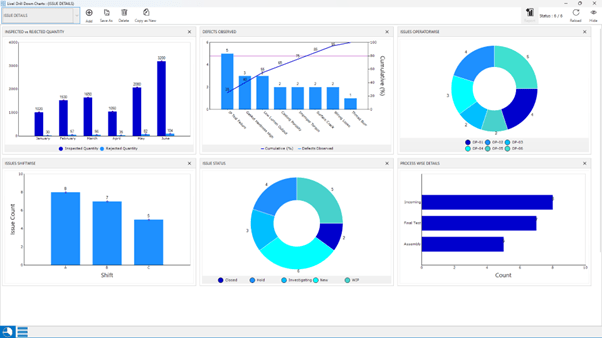
- Each measurement is plotted instantly
- Dimensional drift becomes visible early
- Tool offset can be adjusted before parts go out of specification
- Scrap and rework are significantly reduced
The data remains the same — but when used in real time, it prevents losses instead of reporting them afterward.
Key Question for Manufacturing Leaders
Are you collecting data to complete documentation?
Or are you using it to control variation every hour on the shop floor?
The value of data is not in storing it — It is in acting on it.
Conclusion
Shop-floor data should function as an early warning system, not just a reporting requirement. When supported by real-time monitoring systems like Live!QC tools, data becomes a powerful driver of defect reduction, cost control, and process stability.