From PPAP Paperwork to Connected Quality
Transforming the Way Manufacturers Manage Quality
Introduction
Before a new part enters production, manufacturers need to know that the product and process are ready. This is where Digital PPAP can help.
PPAP brings together the documents, process records, measurements, and quality evidence needed to demonstrate production readiness. But when this information is spread across spreadsheets, emails, and folders, managing revisions, approvals, and deadlines can become difficult.
From Documents to a Connected Process
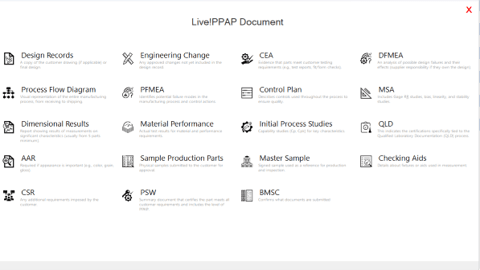
A typical PPAP submission brings together information from engineering, manufacturing, quality, and other functions, including:
- Design records
- Process Flow Diagrams
- PFMEA
- Control Plans
- Dimensional results
- MSA studies
- Inspection results
- Material and performance test records
- Supporting documents
When these activities are managed separately through files, spreadsheets, emails, and folders, maintaining the complete PPAP picture can become difficult.
A connected digital approach organizes these activities around the relevant part, project, customer, or submission, making the overall PPAP process easier to manage and follow.
What a Connected Digital PPAP Provides
Centralized PPAP Management
Manage PPAP submissions and supporting information in one structured digital environment.
Version & Revision Control
Maintain document versions and revisions throughout the project
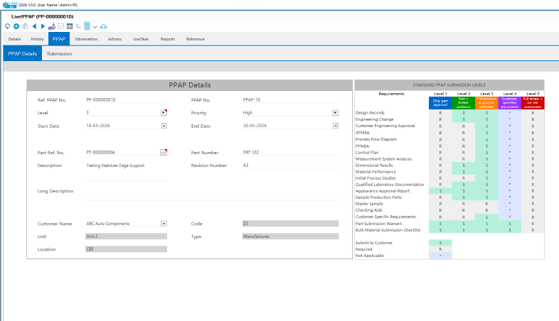
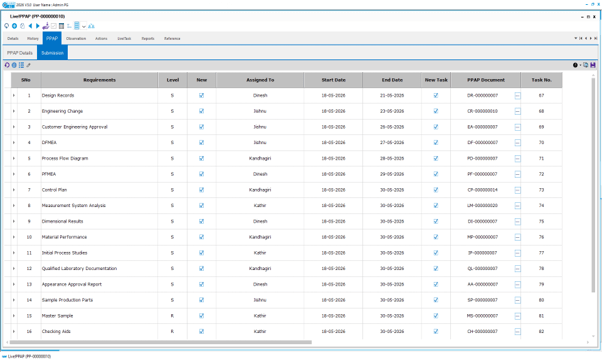
Defined Responsibilities & Workflows
Assign activities to responsible team members and track the submission lifecycle.
Digital Review & Approval
Support defined review and approval stages with visibility of approval status and history.
Notifications & Follow-Ups
Keep stakeholders informed about actions, approvals, deadlines, and next steps.
Traceability
Maintain visibility across revisions, approvals, submissions, and related activities.
Connecting PPAP with Quality Core Tools
The real value of digital PPAP comes when it connects with the wider quality system.
Information from FMEA, Control Plans, MSA, SPC, inspection, and other quality activities can be brought together to create a connected quality chain:
Design → Process → Risk → Control → Measurement → Evidence → Approval
This connection helps teams understand how different quality documents and activities relate to the part and its manufacturing process.
It also gives management better visibility into:
- PPAP status
- Responsibilities
- Pending actions
- Deadlines
- Reviews and approvals
- Submission progress
From PPAP Management to Quality Visibility
When PPAP information is brought together, teams gain better visibility into both the submission process and its supporting quality activities.
They can track:
- Submissions in progress
- Upcoming deadlines
- Pending approvals
- Outstanding actions
- Engineering changes
- Overall completion status
This makes PPAP more than a document submission exercise.It becomes a structured way to understand the status of production-readiness activities.
How Live!QC Tools Helps Transform PPAP
Live!QC Tools helps move PPAP from paper- and email-based coordination toward a structured digital quality process.
It supports organizations in managing PPAP activities through:
Centralized PPAP Management
Manage PPAP submissions and supporting information in one structured environment.
Document & Revision Control
Maintain document versions and revisions throughout the project.
Responsibility & Deadline Management
Assign activities and monitor submission progress and pending actions.
Digital Review & Approval
Support defined review and approval stages with visibility of approval status and history.
Notifications & Follow-Ups
Keep stakeholders informed about actions, approvals, deadlines, and next steps.
Traceability
Maintain visibility across revisions, approvals, submissions, and related activities.
Connected Quality Processes
Connect PPAP activities with quality processes such as FMEA, Control Plans, MSA, SPC, and inspection data.
Management Visibility
Provide quality leadership with an overview of PPAP status, outstanding actions, delays, and submission progress.
Conclusion
PPAP Is More Than Paperwork
PPAP will always remain an important part of many manufacturers’ quality systems.
But the way PPAP is managed can evolve.
A modern approach puts people, documents, approvals, revisions, quality tools, and data into context to create a more connected quality environment.
Because PPAP is not only about submitting documents.
It is about proving production readiness.
And when that information is connected, PPAP becomes much more than a paperwork exercise.
It becomes a structured source of quality information, visibility, and traceability.
From PPAP Paperwork to Connected Quality.
Connect your quality process with Live!QC Tools.

Jishnu Bhaskar is an Application Engineer at Live!QC Tools with expertise in QA/QC, 7QC Tools, 5S, 8D Problem Solving, FMEA, PPAP, and MSA. He specializes in helping manufacturers improve their quality processes through digital transformation and smart Quality Management System (QMS) solutions.